
Slots
How Slot Games Work
A slot game is a game of chance. When you press spin, a random number generator (RNG) selects the result immediately; the spinning reels only display an outcome that has already been decided.
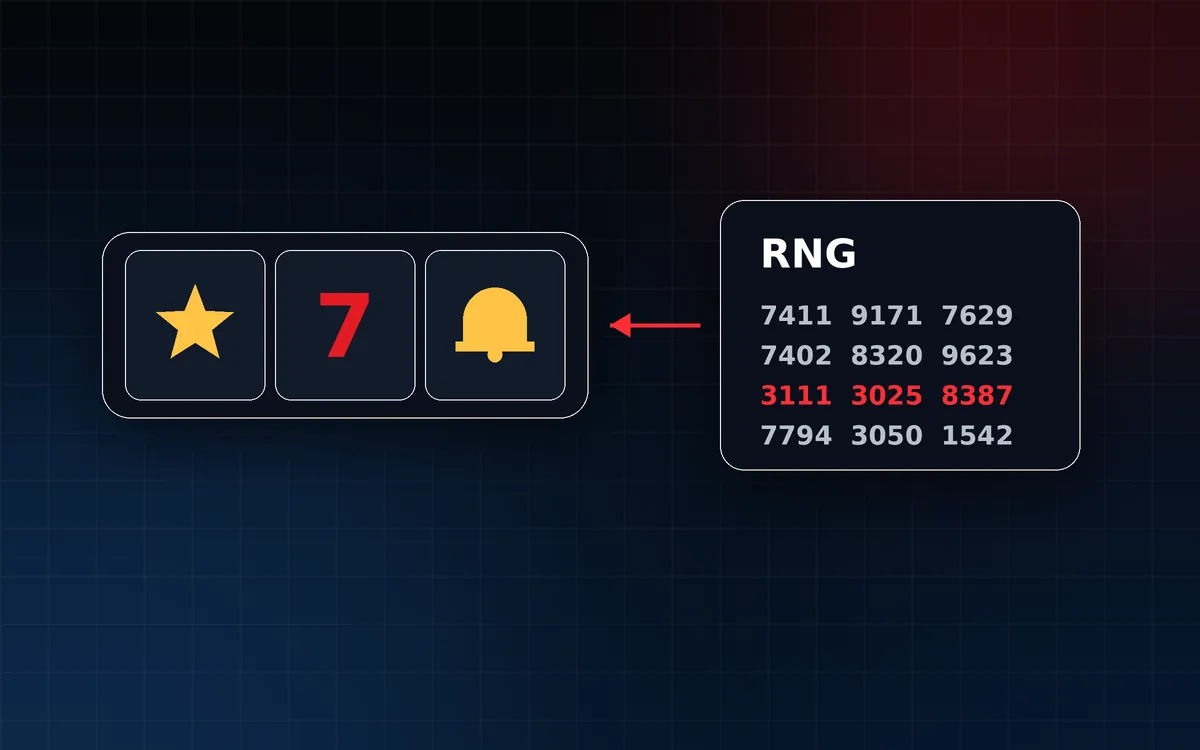
The random number generator
Every modern online slot uses a random number generator (RNG): software that continuously produces numbers with no predictable pattern. The instant you press spin, the game takes the current RNG values and maps them to reel positions. That mapping decides which symbols land and whether you win.
Two consequences follow:
- Each spin is independent. The result of the previous spin, or the previous hundred spins, has no influence on the next one.
- Nothing is "due". A slot that has not paid for a while is not more likely to pay soon.
Independent testing laboratories check RNG software and game maths against published technical standards before games are released in regulated markets.
Reels, rows and symbols
A slot's layout is described by its reels (columns) and rows. A "5×3" slot has five reels with three visible symbols each. Symbols fall into a few common types:
| Symbol type | What it does |
|---|---|
| Standard symbols | Form winning combinations when enough matching symbols land on a payline or connected positions. Higher-value symbols pay more but usually land less often. |
| Wild | Substitutes for other symbols to help complete a combination. Some wilds expand, stick in place or carry multipliers. |
| Scatter | Pays or triggers features wherever it lands, without needing a payline. Often triggers free spins. |
| Bonus symbol | Triggers a specific bonus round when the required number appear. |
How wins are paid
The paytable, found in the game's information or help screen, lists what each combination pays, usually as a multiple of your bet. How combinations are formed depends on the game's win mechanic: fixed paylines, adjustable paylines, "ways to win" or cluster pays. Learn how slot paylines work
Your total bet is the amount deducted per spin. Wins are calculated from that stake according to the paytable.
Bonus features
- Free spins: a set number of spins played without deducting your stake, often with extra wilds or multipliers.
- Multipliers: increase a win by a stated factor, such as ×2 or ×5.
- Cascading or tumbling reels: winning symbols are removed and new ones drop in, allowing several wins from one paid spin.
- Pick-and-click bonuses: you choose items to reveal prizes. The prizes are still determined by the game's maths, not by skill.
- Bonus buy: some games let you pay a fixed price to enter a feature directly. The price is usually a large multiple of the base bet, and the feature can have its own RTP figure.
RTP and volatility
Two figures describe a slot's maths. RTP is the long-term percentage of all stakes the game is designed to return; volatility describes how those returns are spread between frequent small wins and rarer large ones. Neither predicts what will happen in a single session.
Understand slot RTP
Learn how slot volatility works
Common misconceptions
| Belief | Reality |
|---|---|
| A slot is “hot” or “cold”. | Results are independent. Short-term runs are normal randomness, not a pattern. |
| A near miss means a win is close. | A near miss is simply a losing result. It says nothing about the next spin. |
| Stopping the reels early changes the result. | The result is fixed when you press spin. Stopping only shortens the animation. |
| Autoplay or time of day affects odds. | Neither changes the probabilities. Autoplay only repeats your chosen bet. |
| Raising the bet after losses will recover them. | It increases the amount at risk without changing the odds. |
Before you play
- Open the paytable and rules to see how the game pays and what its features do.
- Check the RTP shown in the game's information screen.
- Decide a spending and time limit, and stick to it.